The HRV Guide
Everything you need to know about your heart rate variability.
Updated 10 November 2026. 18 pages and 26 questions, drawn from 138 published sources.
What does last night's number mean?
42 ms on Oura
- On Oura's own figures
- 6 ms above the middle for women on Oura (36 ms). Oura's figures from 6 million members, January to August 2026.
- For your age
- About the 47th percentile for a 35 year old woman. A rough guide from heart studies, not from your device. Healthy people vary a lot.
If you feel fine, one night changes nothing. Judge it against your own last few weeks on this device, and act on a slide that lasts a week or more.
The questions people ask
The short answer to each. Tap one for the full story.
What HRV is
- Is HRV higher in deep sleep or REM?In deep sleep. In lab studies the vagal part of HRV runs higher in deep sleep, and REM looks more like being awake. Devices that weight the stages differently disagree.
- Which matters more, HRV or resting heart rate?Use them together. They usually move in opposite directions, and a low HRV with a sleeping heart rate a few beats higher is a clearer signal than either alone.
- Why does my HRV change so much during the day?Because moving, standing, talking, eating and the time of day all shift it. Daytime values swing widely. Judge your HRV from sleep, when those things hold still.
Your number
- How long does it take to get an HRV baseline?About two to three weeks of nights on one device. Garmin waits three weeks, Oura takes up to two, and a weekly average needs at least five nights in it.
- Is an HRV of 30 good?Often, yes. On a ring or Garmin, 30 ms sits a little under the middle for adults and is common at every age. It's good if it is normal for you.
- What is a good HRV for my age?No age chart can grade your night. HRV falls with age, fastest before 50, but healthy people of the same age differ tenfold, so compare with your own normal.
- What is a good HRV?One that is normal for you. Healthy adults run from under 20 ms to over 100, so judge last night against your own last few weeks on the same device.
- Why did my HRV drop suddenly?Usually last night: drinks, a late dinner, a hard evening workout, a short night or a cold starting. One low night means little. A low week is worth acting on.
- Why is my HRV so low?Often it isn't low for you. Check the measurement first, then age and fitness, then what pulls it down: drinks, smoking, late dinners, late workouts and short sleep.
Watches and rings
- Is Apple Watch HRV accurate?Accurate enough for your own trend, not for comparing with a ring. It reports SDNN, a different number, and came in about 8 ms under a chest strap in a 2024 test.
- Which wearable is most accurate for HRV?In a 2025 overnight test against a chest strap, Oura came closest, then WHOOP, Garmin and Polar. Apple Watch wasn't in it. Wearing one device every night matters more.
- Why did my HRV change when I switched devices?Because each device measures a different stretch of the night, a different way. Your heart didn't change. Start a new history and give it two to three weeks.
- Why do Oura and WHOOP give different HRV numbers?Both report RMSSD, over different parts of the night. Oura averages the whole night and WHOOP weights your last deep sleep, so one night gives two numbers.
Drinks, food and sleep
- Does alcohol lower HRV?Yes, the same night. One drink more than your usual, against one less, came with HRV about 3 to 4 ms lower in 20,968 WHOOP members. Drinking earlier helped a little.
- Does caffeine lower HRV?Not much, and not the way people expect. In sleep lab trials, caffeine near bedtime didn't lower HRV during sleep. What it does reliably is shorten and lighten sleep.
- Does eating late lower HRV?It can. In a 7.5-week trial, finishing the last meal at least 3 hours before sleep raised HRV at night and lowered night heart rate. An earlier dinner is an easy test.
- Does more sleep raise HRV?Enough sleep protects it, and losing sleep lowers it. Across 11 trials of sleep loss, RMSSD fell. Shorter, less regular sleep also goes with HRV that swings more.
- Does stress lower HRV?In the moment, yes, a little. Overnight, how stressed you feel often doesn't show. In a 3-month study, days people felt stressed had the same overnight HRV as calm days.
- How fast can you raise your HRV?Tonight, if the cause is drinks or a late workout. Weeks for earlier dinners and steadier sleep. Months for fitness. Breathing raises it mostly while you do it.
Training and recovery
- Does exercise increase HRV?Yes, over months. Aerobic training raises resting HRV, and more steps went with higher HRV in 8 million Fitbit users. Each hard session lowers it for a day or two.
- Does HRV-guided training work?A little. Runners who trained hard only on good-HRV days improved about as much as on a fixed plan, sometimes slightly more, and often with fewer hard sessions.
- Why is my HRV low after a hard workout?Because your body is still recovering. HRV can take 48 hours or more to come back after a very hard session. Late workouts hit that night hardest, so train earlier.
Health and illness
- Does HRV change with your menstrual cycle?Yes, a little. HRV tends to be higher early in the cycle and lower before your period, by about 3 to 9 percent. The pill goes with lower HRV too. Compare like with like.
- Does HRV drop during pregnancy?Yes, steadily. In over 10,000 pregnancies tracked with Oura, HRV fell by more than 15 ms by week 32 as heart rate rose about 10 beats. That's the usual pattern.
- Does HRV go down when you're sick?Usually, yes. HRV tends to fall as sleeping heart rate, breathing rate and temperature rise, sometimes days before a positive test. A normal HRV rules nothing out.
- When should I worry about low HRV?Rarely because of the number alone. Worry about symptoms: chest pain, fainting, shortness of breath, or a racing or irregular pulse. A low week without them means rest.
Myth or fact?
What people believe about HRV, checked one by one. All the myths
Can you compare your HRV with a friend's, or with an age chart?
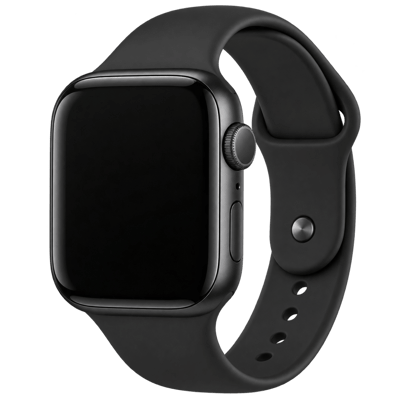
Do your Apple Watch and Oura numbers mean the same thing?
Does one low morning mean you're overtrained?
Does your HRV measure how stressed you are?
Is a higher HRV always better?
Will a supplement raise your HRV?
Will breathing exercises raise your HRV in a week?
Quick calculators
A minute each, one plain answer.
What does last night's HRV mean?
Last night's number and your device in. Where it sits, and a call for today.
What is your normal range?
Up to two weeks of nights in. Your usual range, your 7-day average, and whether last night is low for you.
Check your Garmin HRV Status
Your band from Garmin Connect and seven nights in. Inside or outside, and by how many ms.
How much do tonight's drinks move it?
Tonight's drinks against your usual, and when the last one is. The WHOOP study's figure for that night.
What your device means
Every watch and ring measures HRV its own way. All devices
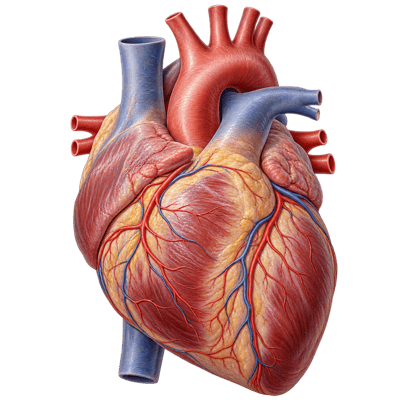
What do Oura's HRV and HRV Balance mean?
Oura measures RMSSD in five-minute samples while you sleep. What the average, the maximum and HRV Balance mean, and how close Oura comes to an ECG in independent tests.
What does Apple Watch HRV mean?
Apple Watch reports HRV as SDNN from short samples, not the RMSSD rings use. What Series 12's Recovery HRV adds, and how accurate the watch is against a chest strap.
What does Garmin HRV status mean?
Garmin compares your 7-day average HRV with your own three-week range. What Balanced, Unbalanced, Low and Poor mean, why Unbalanced can be high, and how accurate it is.
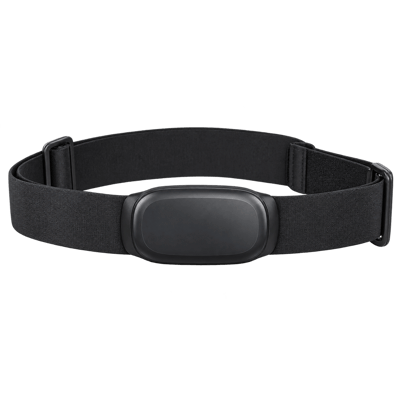
What does WHOOP's HRV number mean?
WHOOP gives one RMSSD value a night, weighted toward deep sleep and later hours. How it feeds Recovery, what green, yellow and red mean, and how it compares with an ECG.
The guide
What heart rate variability is, why the gaps between heartbeats change, what your watch or ring measures, how to judge your own number and what raises it.
- Everything you need to know about HRV
- What is heart rate variability?HRV is how much the gap between heartbeats changes from beat to beat, in milliseconds. Why a rested heart is uneven, what sets the rhythm, and what HRV is not.
- Why do the gaps between heartbeats change?Breathing speeds and slows your heart with every breath, the vagus nerve does the work, and sleep, age, hormones and last night all change how much.
- Why does HRV matter?Low HRV goes with more heart disease, most clearly in people who are already ill. Day to day, it shows what last night did to you. What it predicts and what it can't.
- How do you measure HRV?How a watch, ring or chest strap turns your heartbeats into one number, why SDNN and RMSSD can't be converted, and why night beats morning for most people.
- How do I know if my HRV is low?Judge your HRV against your own usual range on one device. How many nights you need, why the 7-day average beats one night, and when a drop is worth acting on.
- How do you raise your HRV?Finish hard workouts and dinner a few hours before bed, drink less and earlier, sleep enough and train for months. Each lever ranked by how much it moved HRV in studies.